
🎨 In summary: The gold standard of durability and textile authenticity, hand screen printing produces rich, long-lasting colors using eco-friendly water-based inks. Follow this step-by-step guide to making a screen and printing on a carousel.
The Power of Screen Printing in the Studio
🛡️ Durable Clothing
The pigments are bonded to the fabric and can withstand dozens of machine washes without cracking.
🌿 Eco-Friendly Water-Based Inks
Soft to the touch, breathable fabric, and compliant with environmental standards (PVC- and phthalate-free).
🏷️ Ideal for Medium Runs
A particularly attractive volume-based pricing structure for streetwear brands, designers, and companies.
The Screen Printing Process, Step by Step
Typon Exposure & Frame Coating
Each color in the image is isolated on a transparent film (Typon) that is 100% opaque. The aluminum frame, stretched with mesh fabric, is coated with a photosensitive emulsion in a darkroom and then dried.
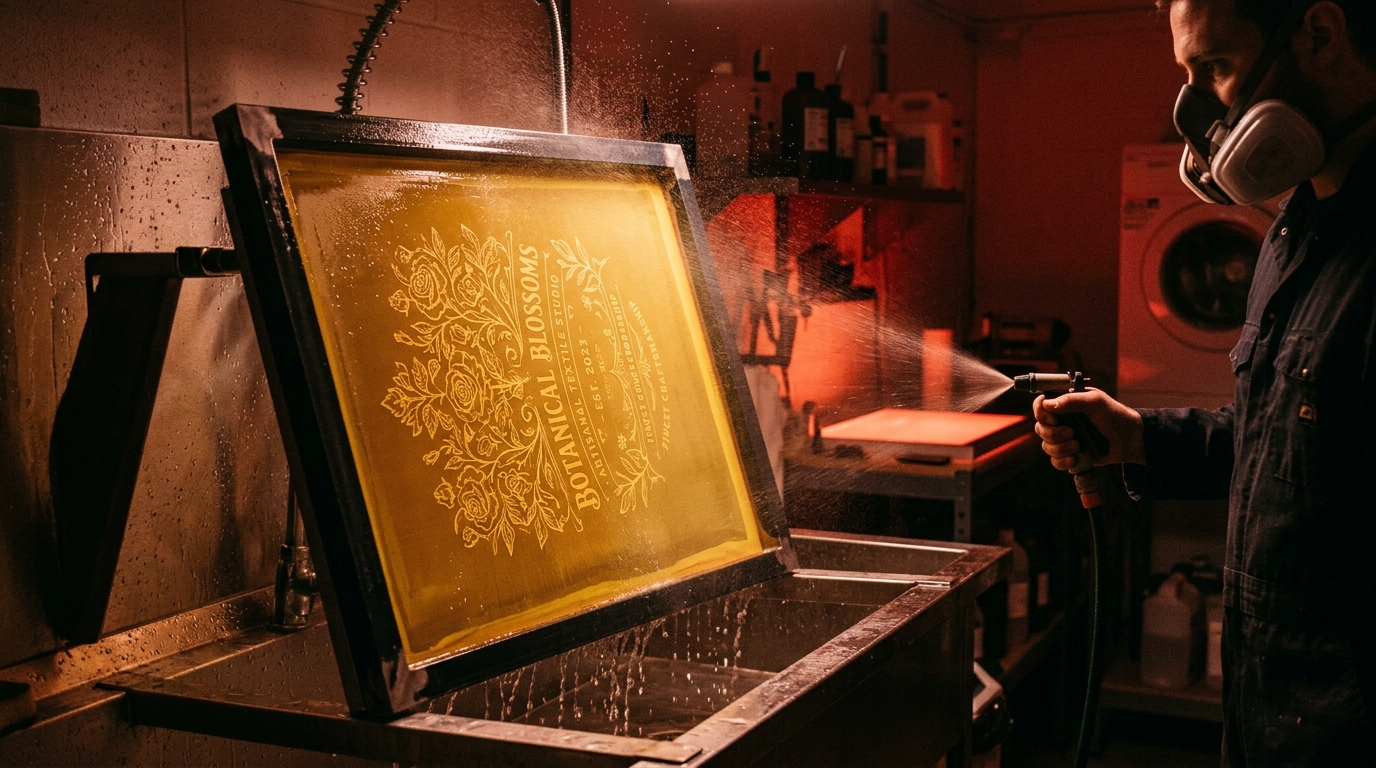
UV Curing and Waterjet Cutting
The screen is exposed to UV light. The emulsion, protected by the black areas of the artwork, remains soluble and dissolves when rinsed with water, revealing the high-definition stencil.
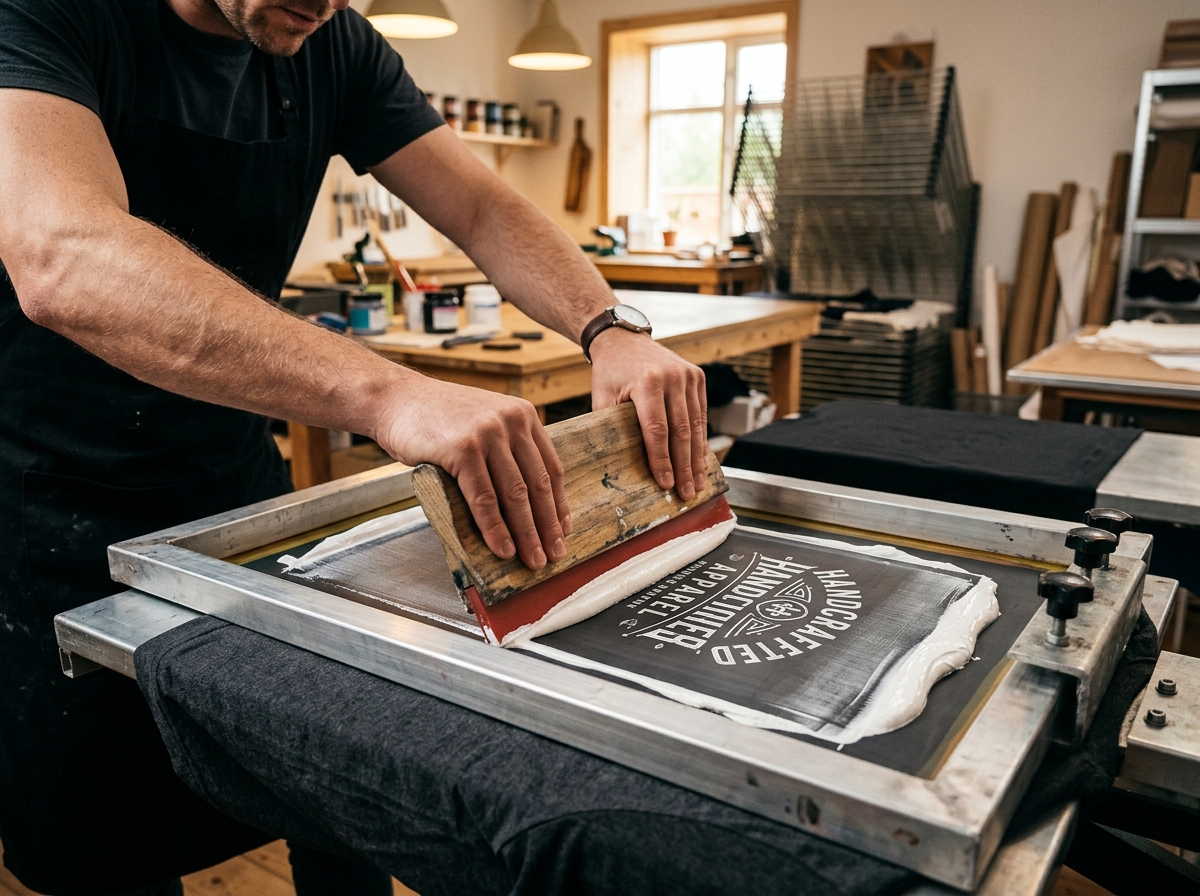
Manual Alignment and Squeegee Application
The screens are secured to the carousel. The screen printer moves the squeegee at a constant 45° angle and with calibrated pressure to transfer the ink through the mesh onto the garment.
Firing & Curing in a Thermal Tunnel
The printed garments pass through our drying tunnel at 160°C for 3 minutes to ensure a permanent chemical bond between the ink and the cotton fibers.
Need premium screen printing?
Request your custom quote within 24 hours for T-shirts, sweatshirts, jackets, and accessories.
 English
  French