
👗 In summary: 3D prototyping and virtual sampling are transforming the development of textile collections. Discover how physical fabric simulation and avatar-based fitting reduce the back-and-forth of physical samples by more than 50%.
The Benefits of 3D Prototyping for Brands
⏱️ Processing Times Reduced by a Factor of 3
Validate sections and volumes in a matter of hours instead of waiting several weeks for samples.
🌱 Environmental Responsibility
Eliminate the waste of meters of fabric and the shipping of physical prototypes, which contribute to pollution.
📸 4K Lookbook Rendering
Showcase your designs to buyers and pre-sell your collection even before you start production.
The 3D Design Workflow at Inkura
Importing 2D Patterns
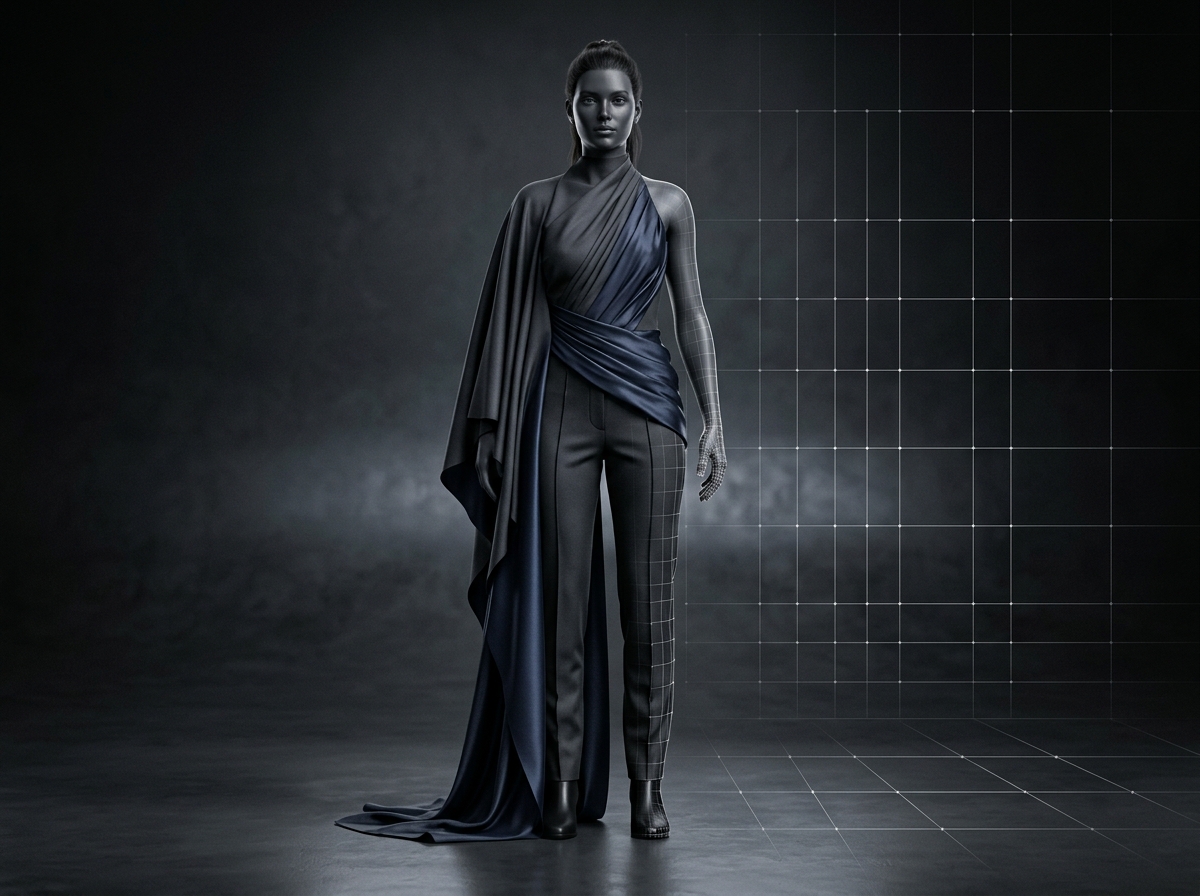
Vector pattern files (DXF, PDF) are imported directly into the 3D software (CLO 3D / Browzwear). Each fabric panel is virtually arranged around the mannequin.
Physical Calibration of Matter
The realism of the simulation depends on the accuracy of the tissue's mechanical parameters:
- Basis weight (g/m²) and thickness.
- Stretch and Elasticity in the warp, weft, and bias directions.
- Bending Stiffness (Drape & Bending) for a true fall.
Virtual Sewing and Tension Map (Fitting)
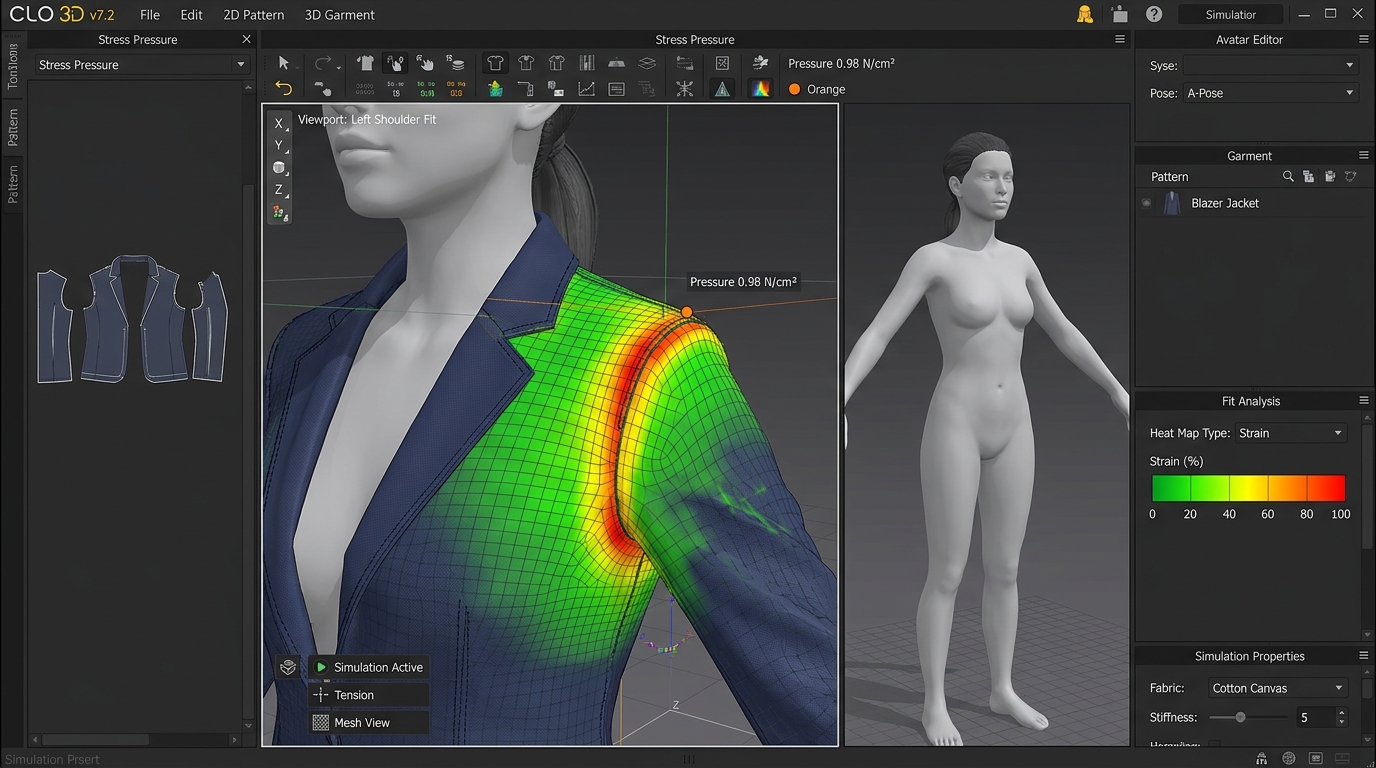
The seams are simulated in real time. Thanks to the biomechanical stress map (Stress & Strain map), we instantly detect areas of excessive tension or unevenness so we can adjust the pattern down to the millimeter.
Texturing & Photorealistic Rendering
Add 3D topstitching, zippers, buttons, realistic fabric textures, and studio lighting to create ready-to-use visuals (lookbooks, e-commerce sites, virtual fashion shows).
📌 Advice from the Inkura Workshop:
The 3D prototype is synchronized with the 2D pattern: every change you make on the screen immediately updates your pattern, saving you time!
Bring your 3D models to life
Contact our 3D modeling team to add a new dimension to your collection.
 English
  French